


Worried a shaky economy is going to eat into your membership revenue? Here are ten practical things you can do this month to protect what you’ve built, without slashing your prices or panicking your members.
Every time the economy wobbles, membership owners start bracing for cancellations. Some of that’s out of your control.
But most of what makes a membership resilient in a downturn isn’t a big strategic pivot. A handful of small, practical habits is usually all that’s needed.
Don’t wait until revenue’s already dropping before you fix them.
Here are ten of them, roughly in order of how quickly you can act on them, plus a 30-day plan for working through the whole list.
Why Does a Recession Hit Membership Sites Differently?
A membership fee shows up on a bank statement every month, right next to rent and groceries. That’s different from a one-time purchase, which gets forgotten the moment it’s made.
When someone’s tightening their budget, a recurring charge is one of the first things they’ll stop and question, even if they still like what they’re paying for.
That’s why membership businesses can feel a downturn before other types of businesses do. It’s rarely that people love your content less. It’s that your membership sits in a line item that gets reviewed every time money feels tight.
How Do You Know If Your Membership Is at Risk Before Members Actually Cancel?
Cancellations are the last step, not the first. By the time someone hits cancel, they’ve usually stopped getting value weeks earlier. A few signs are worth watching for:
- Logins or content views dropping off for members who used to be active
- Support messages that mention price, even indirectly (“just checking what my renewal date is”)
- More members downgrading than upgrading
- A rise in failed payments that don’t get updated within a few days
None of these mean someone’s definitely leaving. But if two or three of them start stacking up for the same member, that’s worth a personal check-in before the renewal date arrives, not after.
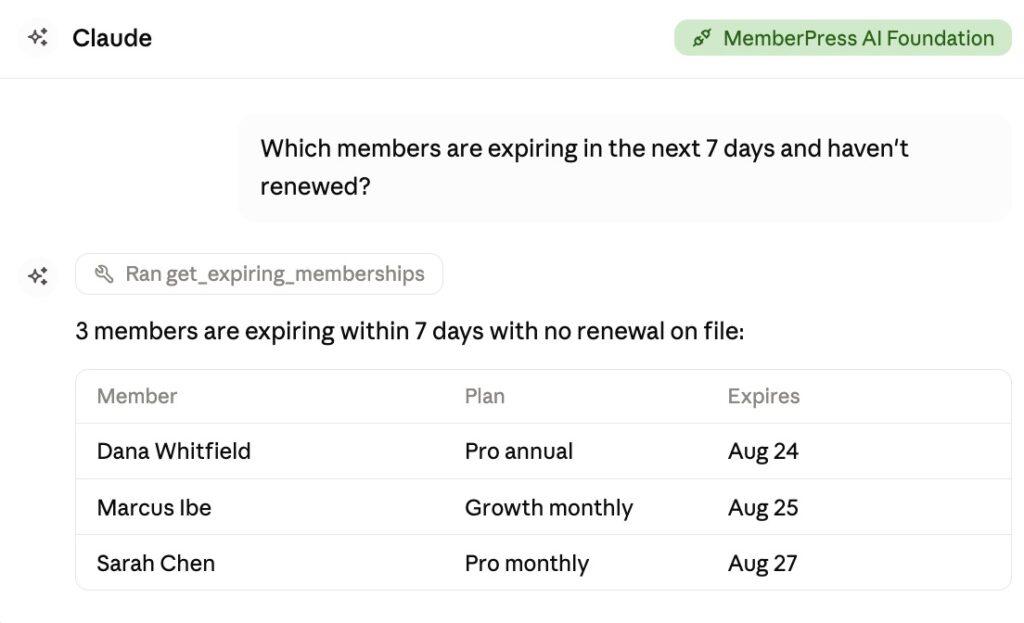
If you’re running MemberPress AI Foundation, you don’t have to piece any of this together by hand.
Ask your connected AI client something like “which members are expiring in the next 7 days and haven’t renewed?” and you’ll have your at-risk list without opening a single report.
What Are the Best Ways to Recession-Proof a Membership Site?
- Get honest about your pricing before your members do it for you. If you’ve never actually said out loud why your membership costs what it costs, do that now. A quick way to start: write down the three outcomes members actually get, in their words, not yours. Members who understand the value tend to stick around longer than members who just liked the price. Don’t discount preemptively. Clarify value first.
- Ask the members who’ve stuck around for 18 months why they’re still here, not the ones who left. Their answers usually tell you what to protect and what to build more of, and it’s rarely what you’d have guessed.
- Fix onboarding before you touch anything else. Members who don’t “get it” in the first two weeks are the first to go when money’s tight. A short welcome sequence with one quick win built in can do more for retention than any new feature. (Exact setup steps are in the action plan below.)
- Give people a way to stay small instead of leaving completely. A lower-priced tier or a “pause” option catches people who’d otherwise cancel outright, and gives you a natural path back to full price once things stabilize.
- Check your numbers weekly, not quarterly. Churn rarely shows up as one dramatic event. It’s a slow drift you can catch early if you’re actually looking.
- Tighten up your failed-payment recovery. A surprising amount of “churn” during a downturn isn’t a member deciding to leave. It’s an expired card nobody updated, and it’s fixable if you catch it in time.
- Give members a reason to log in beyond the content itself. Content alone gets consumed and forgotten. A community space, even a modest one, gives people a reason to stick around that has nothing to do with how much content you shipped this month.
- Add one lower-priced way in the door. Not everyone is ready for your full membership price, especially right now. A single paid download or resource gives hesitant buyers a smaller first step, and lets you test a new price point before rolling it out to your full membership.
- Cut what isn’t earning its place. If there’s a perk you bolted on years ago that barely gets used, retire it. Ask yourself when you last saw a support message or comment about it. If you can’t remember, that’s your answer. Simpler memberships are cheaper to run and easier for members to understand the value of.
- Communicate before members start wondering. A short, honest update, “here’s what we’re doing, here’s what’s staying the same” does more for confidence than staying quiet ever will. It costs you five minutes and buys a lot of trust. Silence is what makes people assume the worst and go looking at their bank statement.
What Does a 30-Day Action Plan for Recession-Proofing Look Like?
You don’t need to do all ten ways at once. We’ve broken the full list into a week-by-week schedule below.
Week 1, Diagnose: pull your churn numbers, dig up your top cancellation reasons, confirm your failed-payment recovery is actually working, and ask your longest-standing members why they’ve stayed.
Week 2, Fix the Leaks: map your onboarding flow, add one quick win to the first week, and write down your pricing story.
Week 3, Protect Value: send members an honest update, list bonus-value ideas instead of a discount, and decide whether a pause option or lower tier is worth building this quarter.
Week 4, Build Resilience: sketch a lower-priced entry product, retire what’s not earning its place, and put a recurring churn check-in on the calendar.
How Long Before You See Results?
Some of this works fast. Turning on payment recovery can save revenue within the first billing cycle, since you’re catching money that was already about to come in. Fixing onboarding takes longer.
You usually need a full cohort of new members to pass through it before you can tell whether early cancellations are actually dropping.
Churn improvements from better communication or a new lower-priced tier tend to show up over 60 to 90 days, not overnight. That’s normal. You’re trying to make sure fewer people leave because of a recession, not trying to stop one, and that shows up gradually.
Frequently Asked Questions
Is it normal for membership cancellations to increase during a recession?
Yes, though usually gradually rather than all at once. Members tend to cancel subscriptions they’ve stopped actively using well before they cancel ones they still get value from.
Should I lower my prices to keep members during a downturn?
Not as a first move. Cutting prices signals the value was negotiable and is hard to reverse later. Adding value or offering a lower-cost tier tends to work better than a blanket discount.
What’s the single most useful thing to do first?
Look at your churn and payment-failure data. A lot of what looks like a member “choosing to leave” is actually a fixable problem, like a declined card, that you can catch and correct.
Do I need new features to recession-proof my membership?
Not usually. Most of what protects a membership site is process: onboarding, communication, and catching payment failures early. Features help, but they’re not the starting point.
Is there a printable version of this action plan?
Yes. We’ve put all 30 days into a fillable checklist you can download, print, or complete on screen as you work through it, with the full step-by-step detail and links for every task included.
Is there a faster way to check my churn rate than digging through reports?
Yes. With MemberPress AI Foundation, you can ask a connected AI client directly, for example, “Which membership plan has the highest churn right now?”, and get an answer pulled from your live site data instead of exporting a CSV and counting manually.
TL;DR
- Most recession-proofing is habits, not big pivots: track churn weekly, fix onboarding, and catch failed payments before they turn into cancellations.
- Cancellations are the last step, not the first. Watch for drop-offs in activity, price-related messages, and failed payments before renewal day arrives.
- Talk to your most loyal members, not just the ones who left, to find out what’s actually keeping them around.
- Skip the blanket discount. A lower-priced tier, a pause option, or a smaller entry product protects revenue without devaluing what you already offer.
- Give this 60 to 90 days. Payment recovery pays off almost immediately; churn and retention shifts take longer to show up.
If a few of these feel like more manual work than your current setup can handle, MemberPress is packed with recession-proofing features, from failed-payment email alerts and churn reporting to flexible membership tiers.
Connect MemberPress AI Foundation and you can just ask for the numbers instead of digging through reports!

Get MemberPress Today!
Start getting paid for the content you create.

If you found this article helpful, follow us on Facebook, X, Instagram, and LinkedIn!












Add a Comment