

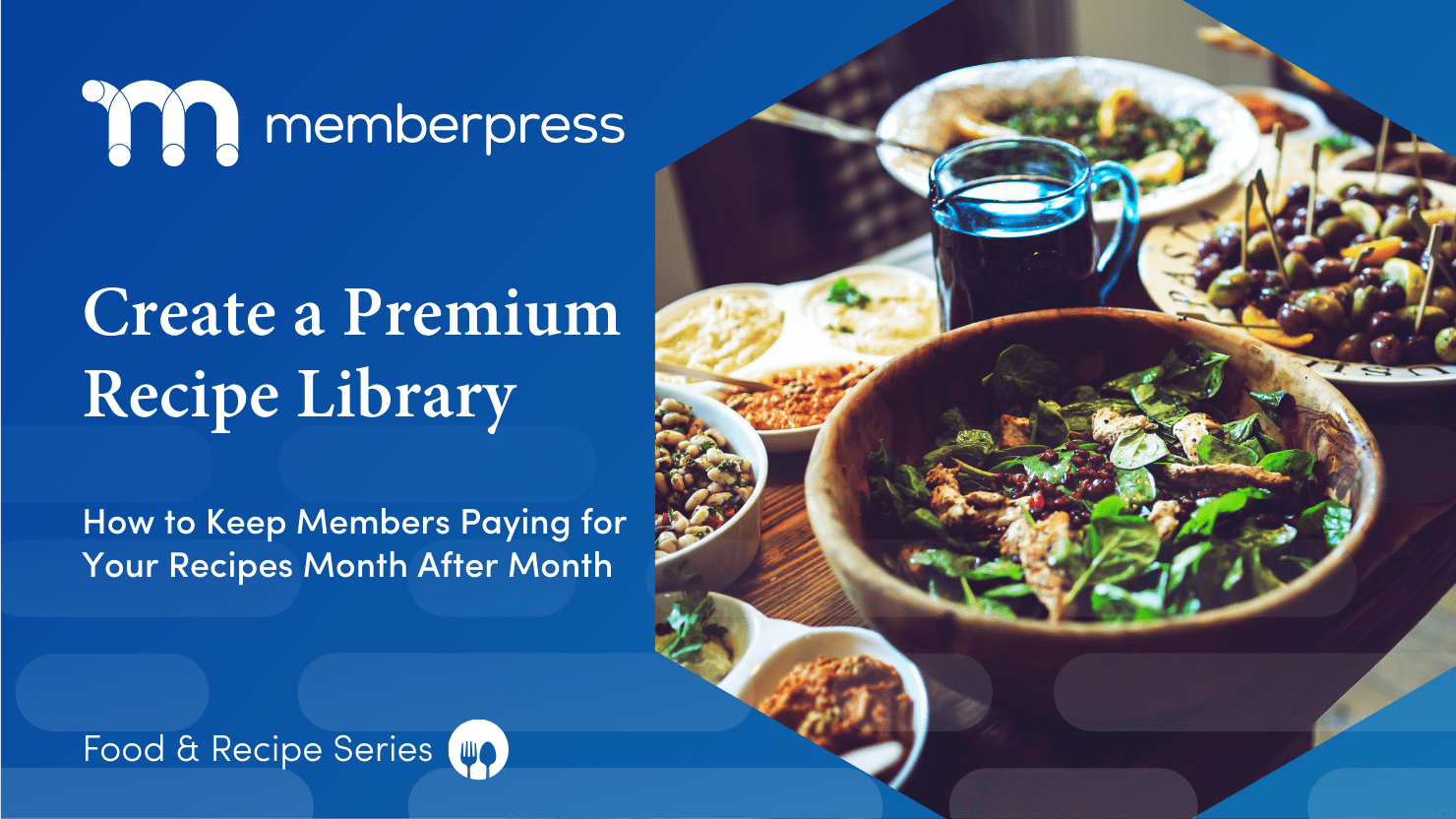
Free recipes get people in the door. Premium recipes keep them paying month after month.
The most straightforward food membership model is this: give away some recipes for free, charge for the best ones. Simple in concept, but the execution matters.
What makes a recipe worth paying for when millions of free recipes exist online?
That’s what we’re going to figure out!
? This article is part of our step-by-step series on building a successful food and recipe website. For the complete roadmap, including every guide in the series, start here ? How to Create a Food and Recipe Website
The Free vs. Premium Split
First, let’s establish the strategy. You’re not putting everything behind a paywall; you’re creating two tiers of content that serve different purposes.
Free recipes:
- Drive SEO traffic and discovery
- Showcase your style and quality
- Build your email list
- Establish trust before asking for payment
Premium recipes:
- Deliver extra value that justifies the subscription
- Solve deeper problems than surface-level recipes
- Include elements that take more effort to create
- Create “I need access to this” moments
The ratio varies, but I’d suggest starting with about 30% free, 70% premium.
Enough free content to rank in search and demonstrate value, but the bulk of your library reserved for paying members.
What Makes Recipes Worth Paying For
Here’s the honest truth: a basic recipe isn’t worth paying for. Anyone can find “how to make chicken stir fry” for free.
Premium recipes need to offer something more. Here’s what actually creates value:
1. Depth of Development and Testing
Free recipes online are often untested or tested once. Premium recipes should be bulletproof.
What this looks like:
- Multiple rounds of testing with notes on what works
- Specific measurements (not “a pinch of salt”)
- Temperature and timing precision
- Clear indicators of doneness
- Troubleshooting tips for common problems
When a member follows your recipe and it works perfectly every time, that’s worth paying for.
2. Detailed Technique Instruction
Most recipes tell you what to do. Premium recipes teach you how to do it.
What this looks like:
- Explaining why each step matters
- Photos or video of tricky techniques
- Common mistakes and how to avoid them
- The science behind what’s happening
- Tips that come from experience, not just following a recipe
A free recipe might say “sauté the onions until softened.” A premium recipe explains what “softened” looks like, how to tell when you’ve gone too far, and why this step affects the final dish.
3. Exclusive or Hard-to-Find Content
Some recipes are inherently more valuable because they’re not available everywhere.
What this looks like:
- Restaurant copycats with real testing and development
- Family heirloom recipes with personal stories
- Regional dishes not well-documented online
- Your original creations that can’t be found elsewhere
- Recipes from professional training adapted for home cooks
4. Complete Meal Solutions
Individual recipes are helpful. Complete solutions are more valuable.
What this looks like:
- Full menu suggestions for different occasions
- What to serve with this dish
- How to prep components ahead
- Scaling for different group sizes
- Leftover transformation ideas
5. Dietary Customization
People with dietary restrictions struggle to find recipes that work for them. Deep customization is valuable.
What this looks like:
- Tested substitutions for common allergens
- Adaptations for keto, paleo, vegan, etc.
- Nutritional information with macros
- Notes on which modifications work and which don’t
- Ingredient swaps that maintain flavor
6. Supporting Resources
Premium recipes can include extras that add convenience.
What this looks like:
- Printable recipe cards (formatted for kitchen use)
- Shopping lists
- Prep timelines
- Equipment recommendations
- Video walkthroughs or online courses
Organizing Your Recipe Library
A well-organized library helps members find what they need and discover recipes they didn’t know they wanted.
Category Structure
Create categories that match how your audience thinks about meals:
By meal type:
- Breakfast
- Lunch
- Dinner
- Snacks
- Desserts
By time/effort:
- 30-minute meals
- Slow cooker/hands-off
- Weekend projects
- Quick prep, long cook
By occasion:
- Weeknight dinners
- Meal prep
- Entertaining
- Holiday
- Kids’ favorites
By diet (if relevant to your niche):
- Keto
- Paleo
- Plant based
- Gluten-free
Tagging Strategy
Tags let members filter and search more precisely:
- Main protein (chicken, beef, tofu, etc.)
- Key ingredients
- Cooking method (grilled, baked, instant pot)
- Season
- Cuisine type
- Skill level
Making Content Discoverable
Beyond categories and tags:
- Curated collections: “My 10 favorite weeknight dinners,” “Best recipes for beginners”
- Search functionality: Make sure your site search works well
- Related recipes: Show similar options on each recipe page
- Member favorites: Let members save recipes to their own collections
Setting Up Content Protection
In MemberPress, you’ll use Rules to control access. Here’s my recommended approach for recipe sites:
The Category Method
- Create a WordPress category called “Premium Recipes” (or “Members Only”)
- In MemberPress, go to Rules > Add New
- Select “A Single Category” and choose your premium category
- Set access to require your membership level
- Save the rule
Now any recipe assigned to that category is automatically protected.
Partial Content Protection
Sometimes you want to show part of a recipe publicly (for SEO) while protecting the full version.
Use the MemberPress shortcode approach:
- Show the recipe intro and photo to everyone
- Put the actual recipe (ingredients and instructions) inside shortcodes
- Non-members see a teaser; members see everything
This works well for driving search traffic while still requiring membership for the valuable content.
Multi-Tier Protection
If you have multiple membership levels (and you should), you might want different recipe tiers:
Basic Members: Access to standard premium recipes
Premium Members: Access to everything – you could include meal prep, courses, downloads, community access, etc.
Create separate categories and rules for each tier.
Pricing Your Recipe Library
What should you charge for access?
Market research:
- Look at similar food membership sites
- Check what meal planning services charge
- Consider what a single cookbook costs
Common price points:
- $5-9/month: Entry-level, good for building initial membership
- $10-15/month: Sweet spot for most recipe libraries
- $15-25/month: Justified when including meal plans, community, or other extras
My suggestion: Start at $9-12/month for a pure recipe library. You can always add value and raise prices later. It’s harder to lower prices without upsetting existing members.
Offer annual billing: A discount for paying annually (typically 15-20% off) improves your cash flow and reduces churn.
Building Your Initial Library
You don’t need hundreds of recipes to launch. Quality matters more than quantity.
Launch with:
- 25-50 solid premium recipes across your main categories
- A clear content calendar showing what’s coming
- 5-10 free recipes for SEO and discovery
Then consistently add:
- 2-4 new premium recipes per week (sustainable pace)
- Update and improve existing recipes based on member feedback
- Seasonal content drops (holiday collections, summer grilling, etc.)
Driving Upgrades from Free to Paid
Your free recipes should make people want more.
Strategies that work:
- End free recipes with “If you liked this, members get access to [related premium recipe]”
- Show premium recipe titles and photos (but not full content) so visitors know what they’re missing
- Create “best of” collections that mix free and premium recipes
- Use email sequences that highlight premium content to free subscribers
The goal is to demonstrate enough value with free content that paying for more feels like an obvious next step.
What’s Next?
A premium recipe library is a strong foundation. To increase the value (and justify higher pricing), consider adding meal planning subscriptions.
What would make you pay for a recipe membership? What’s missing from free recipe sites? Share your thoughts in the comments!If you liked this article, follow us on Facebook, Pinterest, and LinkedIn. And don’t forget to subscribe to our newsletter









Add a Comment