

Recipes solve “what’s for dinner” once. Meal plans solve it forever.
Recipe food content is abundant, but meal plans are scarce.
Anyone can Google “chicken recipes” and get a million results. But “what should I eat this week that fits my budget, dietary needs, and the 30 minutes I have on Tuesday night?” That’s a question most people can’t answer without real help.
That’s why I think meal planning is one of the highest-value offering in the food membership space. Yes, you’re giving people recipes, but you’re also removing an exhausting daily decision from their lives.
? This article is part of our step-by-step series on building a successful food and recipe website. For the complete roadmap, including every guide in the series, start here ? How to Create a Food and Recipe Website
Why Meal Planning Commands Premium Prices
Here’s why meal planning subscriptions work so well:
You’re solving the meta-problem
The hard part of cooking isn’t following a recipe. It’s figuring out
- what to make,
- whether you have the ingredients,
- how it fits with everything else you’re eating that week,
- and how to not waste food.
Meal plans solve all of that at once.
Decision fatigue is real
Research suggests we make around 35,000 decisions a day. “What’s for dinner?” feels small, but it’s actually a cascade of micro-decisions: what sounds good, what’s healthy, what’s in the fridge, what fits the time available, what the family will eat. That mental load is exhausting. Removing it is genuinely valuable.
It’s inherently recurring
A recipe collection might feel “complete” at some point. Meal plans never do. Your members need a new one every single week, which is exactly what you want for subscription retention.
The results are concrete
“I saved 3 hours this week” and “I only went to the grocery store once” are tangible outcomes people will pay to maintain.
Food blogger The Girl On Bloor launched a meal planning membership at $8/month and grew to over 300 members in just 6 weeks.
That’s roughly $2,400/month in recurring revenue from a focused, valuable offer.
Not from millions of pageviews, but from 300 people who found her plans genuinely useful.
Who Meal Planning Memberships Serve Best
Meal planning isn’t for everyone. Your ideal members are people who:
- Have consistent constraints. Busy parents, people following specific diets, budget-conscious families. They need plans that work within their reality, week after week.
- Value their time. Someone who enjoys leisurely grocery browsing and spontaneous cooking won’t pay for planning. Someone who dreads the “what’s for dinner” conversation will.
- Want structure, not just inspiration. Recipe browsers want ideas. Meal plan subscribers want answers.
The more specific your audience’s constraints, the more valuable your plans become.
A generic “weekly meal plan” competes with dozens of free options. “Keto meal plans for families where not everyone is doing keto” solves a very specific problem that’s hard to solve elsewhere.
What Goes Into a Valuable Meal Plan
A meal plan isn’t just a list of recipes. It’s a complete system that makes the week effortless.
The Core Components
Weekly menu
5-7 dinners, plus breakfast and lunch options if relevant to your niche. Include variety but not so much that shopping becomes complicated.
Recipes for everything
Full recipes for each meal, formatted consistently. Members shouldn’t have to hunt for instructions.
Consolidated shopping list
This is where the real value lives. Combine ingredients across all recipes. Organize by grocery store section. Include quantities that account for the whole week.
Prep guide
What can be done ahead? What order makes sense? If Sunday prep saves 2 hours during the week, show exactly how.
Nutritional information
Essential for diet-focused niches. Helpful for everyone else. Include macros, calories, or whatever metrics matter to your audience.
Substitution notes
What if someone hates cilantro? What if the store is out of chicken thighs? Flexibility makes plans usable in the real world.
The Premium Additions
Leftover integration
Show how Wednesday’s roast chicken becomes Thursday’s chicken salad. Reducing waste is a major selling point.
Scaling options
Plans for 2 people vs. families of 6. Batch cooking versions for meal preppers.
Themed variations
Budget week. Pantry clean-out week. 20-minute meals only. Give members choices that fit different circumstances.
Freezer-friendly flags
Mark which recipes freeze well for members who want to cook ahead.
Structuring Your Meal Planning Membership
You have several options for how to package and deliver meal plans:
Option 1: Meal Plans as the Core Offering
Your membership is primarily about meal plans. Recipes exist to support the plans, not the other way around.
Pricing: $8-15/month
What’s included:
- Weekly meal plan delivered every Sunday (or whenever makes sense)
- Complete shopping list
- All recipes
- Prep guide
- Community access for questions and sharing
This works best if meal planning is your primary focus and your audience specifically seeks you out for that.
Option 2: Meal Plans as Premium Tier Benefit
Your basic membership includes recipe access. Premium adds meal plans.
Basic ($9/month): Premium recipe library, printable recipe cards
Premium ($18/month): Everything in Basic + weekly meal plans + shopping lists
This works well if you have substantial recipe content and want to create an upgrade path.
Option 3: Meal Plans as Standalone Add-On
Sell meal plan subscriptions separately from recipe access.
Recipe membership: $10/month
Meal planning subscription: $8/month
Bundle: $15/month
This captures revenue from people who want one but not both.
Real Meal Planning Sites Using MemberPress
These creators have built successful meal planning offerings with MemberPress:

Health My Lifestyle
Health My Lifestyle offers everything you need for a plant-based lifestyle: recipes, meal plans, and shopping lists. They use MemberPress to manage three membership tiers, each including 400+ recipes and access to all prior meal plans.
Their model shows how meal planning fits naturally into a broader membership offering. The plans aren’t sold separately, they’re a key benefit that keeps members subscribed.
40 Aprons
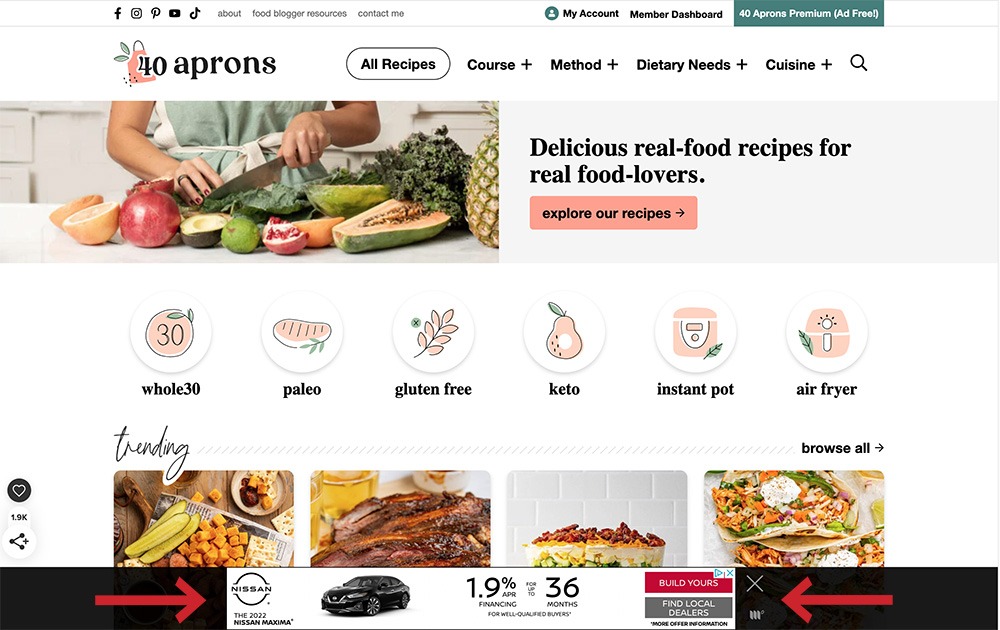
40 Aprons is run by Cheryl Malik, who’s been using MemberPress to monetize her alternative diet recipe blog since 2015.
She focuses on Whole30, paleo, keto, and other dietary approaches. Exactly the kind of niches where meal planning delivers massive value.
When your audience has specific dietary constraints, a done-for-you weekly plan removes enormous mental load. What started as a side project became a full-time business.
Setting Up Meal Plans in MemberPress
Here’s the technical setup:
Create your meal plan membership or tier
Go to MemberPress > Memberships > Add New. Configure your meal plan offering with appropriate pricing.
Set up your delivery structure
You have two main approaches:
Approach 1: Protected posts
Create each week’s meal plan as a WordPress post in a “Meal Plans” category. Use MemberPress Rules to protect that category. Members access plans through your site, and you can use categories or tags to organize by date.
Approach 2: Protected page with current plan
Create a single “This Week’s Meal Plan” page that you update weekly. Simpler to manage, but members can’t easily access past plans.
I recommend Approach 1. Past meal plans remain valuable; members often want to revisit favorites.
Set up content dripping (optional but powerful)
MemberPress Drip Content lets you release meal plans on a schedule. Configure new plans to become available every Sunday. This creates anticipation and a reason to return weekly.
Automate the announcement
Connect MemberPress to your email platform. Set up an automation that emails members every time a new meal plan posts. Include a preview of the week’s meals and a direct link.
Create a meal plan archive
Build a page that displays all available meal plans in reverse chronological order. Include filters by theme, season, or dietary focus. Make it easy for members to find plans from any week.
Your Meal Plan Creation Workflow
Producing weekly meal plans is a commitment. Establish a sustainable workflow:
My suggested timeline:
Two weeks ahead: Menu planning
Decide on the 5-7 recipes for the week. Consider seasonal ingredients, variety, and prep efficiency. Make sure you’re not using expensive or hard-to-find ingredients too frequently.
One week ahead: Recipe development
Test any new recipes. Finalize nutritional information. Write or update all recipe content.
3-4 days ahead: Shopping list and prep guide
Consolidate ingredients across all recipes. Organize by store section. Write the prep guide with timing and sequence.
2 days ahead: Final review
Proofread everything. Check that links work. Verify nutritional calculations.
Delivery day: Publish and announce
Post the new plan. Trigger email announcement. Share preview on social media.
Batch creation option:
Create 4-8 weeks of meal plans at once. Use MemberPress scheduling to release them weekly. This lets you work in focused bursts rather than constant weekly production.
Template everything:
Create templates for:
- Meal plan post layout
- Shopping list format
- Prep guide structure
- Email announcement
Consistency speeds up production and helps members know what to expect.
Content Ideas for Meal Plans
Variety keeps members subscribed. Rotate through different themes and approaches:
By time/effort:
- 30-minute meals week
- Slow cooker week (minimal active time)
- Sheet pan dinners (easy cleanup)
- No-cook summer meals
- Make-ahead freezer meals
By budget:
- Budget-friendly week (under $X total)
- Pantry staples week
- Sales-driven planning (seasonal deals)
By dietary focus:
- Keto/low-carb week
- Plant-based week
- High-protein week
- Whole30-compliant week
- Allergen-free week
By lifestyle:
- Back-to-school family meals
- Working-from-home lunches included
- Entertaining-ready (doubles easily)
- Singles/couples portions
- Family-friendly kid-approved
By season:
- Summer grilling plan
- Fall comfort food
- Holiday survival plan
- New Year reset
Special events:
- Thanksgiving week (full menu)
- Super Bowl party planning
- Back-to-school prep
- Summer vacation easy meals
Promoting Your Meal Plans
Meal planning memberships sell themselves once people experience them. Your job is getting them to that first experience.
Lead magnet: Free sample meal plan
Give away one week’s meal plan in exchange for an email address. Include everything: recipes, shopping list, prep guide. Make it genuinely useful, not a watered-down teaser.
Follow up with an email sequence showing how much easier their week was with a plan, and how membership delivers that every week.
Blog content that leads to meal plans
Write posts about meal planning struggles and solutions:
- “How to Meal Plan When Your Family Has Different Dietary Needs”
- “The Sunday Prep Routine That Saves Me 5 Hours Every Week”
- “Why I Stopped Meal Planning (And Why I Started Again)”
End each post with a natural transition to your meal planning membership.
Social proof
Ask members to share:
- Photos of their prepped meals
- Time savings testimonials
- Grocery bill comparisons
- Family feedback
Real results from real people convert better than any sales copy.
Free trial or first month discount
Meal plans prove their value through experience. A discounted first month or 7-day free trial lets people feel the relief of having their week planned before they commit.
Measuring Success
Track these metrics to improve your meal plans over time:
Usage metrics:
- Which meal plans get the most views?
- Which recipes within plans are most popular?
- Do members access the shopping list? The prep guide?
Retention correlation:
- Do members who engage with meal plans retain longer?
- Is there a “magic number” of plans used that predicts retention?
Feedback:
- What modifications do members mention making?
- What do they wish was included?
- Which plans get the most community discussion?
Use this data to refine your offering. If shopping lists are the most-accessed element, make them even better. If certain themes underperform, replace them.
What’s Next?
Meal plans deliver ongoing practical value. But your food and recipe website has even more earning potential with the addition of relevant online cooking courses. It’s the next in article in our series on How to Create a Food and Recipe Website.
What’s your biggest meal planning struggle? Too many decisions, not enough time, picky eaters, dietary restrictions? Share in the comments. Your challenge might become a future meal plan theme!

Start Your Nutrition Membership Business Today!
Get MemberPress, and start getting paid for the content you create.

If you found this article helpful, follow us on Facebook, X, Instagram, and LinkedIn!












Add a Comment