


Looking for the latest membership site statistics? You’ve come to the right place. We’ve been tracking the most important insights for membership businesses, and I can tell you, the game has changed.
The creator economy is maturing. We’re seeing a massive shift away from chasing huge, passive audiences. The new focus? Building smaller, highly-engaged niche communities.
Success is no longer just about personality; it’s about demonstrating real, verifiable expertise.
This is where the power of platform independence becomes critical. We’ve seen countless creators realize the danger of building their entire business on a social platform they don’t control. The smart move is to own your audience directly, and a membership site is the single best way to do it.
Of course, we have to talk about AI. But it’s not about replacing creators, I see it as a powerful assistant.
Creators are using AI to augment their creativity, streamline their work, and deliver more value to their members. In fact, nearly nine out of ten organizations are already regularly using AI, and the creator world is no exception.
Ultimately, it all comes down to authentic connection. The data proves it: community-driven memberships can see retention rates as high as 85-92%, crushing the 60-70% rate for content-only platforms.
This entire shift is happening inside the booming subscription economy, a market that’s projected to swell from $487 billion in 2024 to over $2,129.92 billion by 2034.
We know a thing or two about this at MemberPress. I’ve watched our customers build incredible businesses by embracing these very trends. In fact, I’m thrilled to announce that MemberPress customers have now earned over $2 billion in revenue!
We built this platform to make it easy for entrepreneurs like you to turn your expertise into a thriving business. But I want you to be just as confident as we are.
That’s why I’ve compiled the latest statistics for the three most popular membership models:
- Learning Management Systems (LMSs)
- Association Memberships
- Subscription Sites
These insights will help you focus your marketing strategy and show you exactly where our industry is headed.
LMS Statistics
Online courses are a great way to add value and more offerings to your business.
That’s why more and more businesses are using learning management systems (LMS) to build online educational sites or add learning components to their membership sites.
MemberPress Courses is an LMS built right into MemberPress that allows you to do just that – fast and easy.
Let’s start by looking at the market for LMS platforms.
- The global LMS market is projected to skyrocket from $27.09 billion in 2025 to $82.00 billion by 2032, that’s a compound annual growth rate (CAGR) of 17.1%. (Fortune Business Insights)
- North America dominated the global LMS market in 2024, holding the largest share at 42.57%. (Fortune Business Insights)
- The Asia-Pacific region is projected to have the highest Compound Annual Growth Rate (CAGR) through 2030. This explosive growth is being driven by massive government investments in digital education and a huge, mobile-first population rapidly adopting e-learning. (Grand View Research)
- These markets use LMS systems the most due to the high adoption rate of technology and the availability of internet infrastructure. (Straits Research)
- 88% of organizations cite a poor user experience (UX) as the main reason for switching their learning tools. (Atrixware)
- The industries using LMS platforms can be broken down as follows:
- Education: 21%
- Technology: 12%
- Manufacturing: 9%
- Healthcare: 7%
- Consulting: 7%
- Software Development: 4%
- Non-Profits: 3%
- Real Estate: 3%
(eLearningStats)
- 90% of corporations now use e-learning as part of their employee training. This is a massive number shows that digital learning has become a standard, essential business practice. (Saufter AI)
- Today, over 87% of organizations use a cloud-based LMS, leaving only 13% of the market to traditional, on-premise systems. (iSpring Solutions)
- 81% of U.S. college students use a laptop for their coursework, and at the same time, a significant 56% report completing academic work on their smartphones. (Market.biz, Research.com)
- For most small to medium-sized businesses, a proper LMS implementation typically ranges from $5,000 to $25,000. For larger companies or those needing a custom-built platform, those costs can easily start at $50,000 and go much, much higher. (Software Finder)
- A 6–8 week timeline is common for small deployments. For enterprise-scale rollouts that involve complex integrations and data migration, a 4–6 month timeframe is more realistic. (Whatfix)
Association Memberships Site Statistics
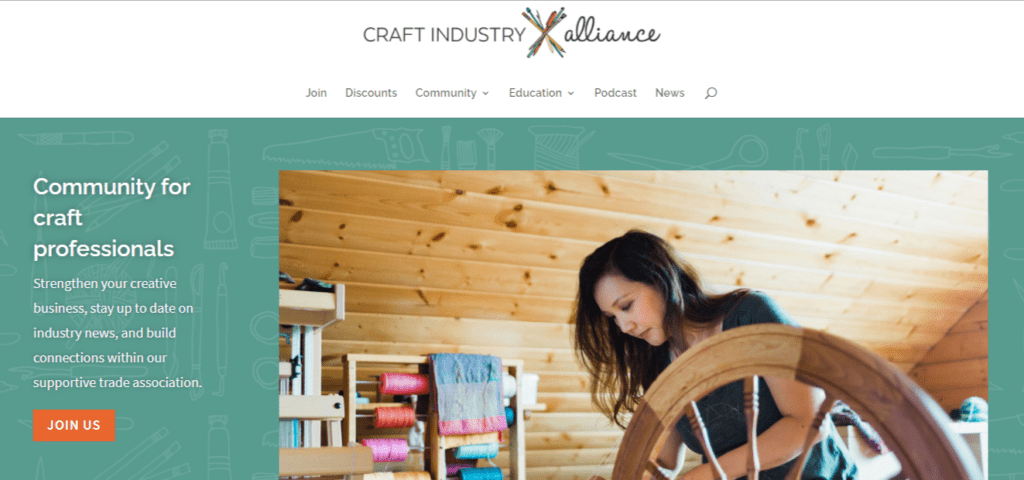
Association memberships are typically smaller organizations that serve the interests of a profession or trade.
Associations are also related to charity and philanthropic works.
These bodies often recruit and support individual member organizations (IMO), trade groups, or a combination of the two.
Associations are built to develop and share knowledge and best practices, and to help their members’ networks. They also support members and advocate for their interests.
Association membership organizations don’t cater to general consumers. The needs of members are unique, and each association may have its own specific culture based on the industry it’s in.
Let’s look at some helpful membership site statistics that will improve marketing for an association and boost recruitment.
- “Why do people join associations?” The latest 2025 data gives us a very clear answer. We’ve found that the top reasons are all about tangible career advancement. According to a recent report, members said their primary motivations were:
- 54% joined to expand their professional network.
- 53% joined to stay up to date with the latest trends/events in their industry.
- 49% said it benefits their career development. (Associations Now)
- When we look at the average member retention rates, trade associations (those that recruit companies) have the highest at 90%. But combination associations (those that recruit both individuals and companies) are right behind them with an 83% retention rate. Associations that only recruit individuals have a slightly lower average retention of 81%. (Billhighway / MGI)
- The largest generational group in associations is the Baby Boomer generation (27%). Millennials form the next highest group at25% while Generation Z typically constitutes 11%. (Associations Now)
- When we look at the overall recruitment channels that garner the most new members, the data has shifted. According to the 2025 Membership Performance Benchmark Report, events and meetings are now the top-performing strategy, cited by 52% of organizations, followed by member referrals (word of mouth) and email marketing. (Propello)
- Within digital recruitment channels, 53% of all web traffic comes from organic search (SEO), while paid search (PPC) accounts for 27%. In fact, SEO converts at a rate of 2.4%, which is nearly double the conversion rate of 1.3% for paid search ads. (Sagapixel)
- What are the most used social media platforms for associations? LinkedIn is now the #1 choice for paid advertising, with 41% of associations using it. This is followed by search engines (36%) and Facebook (35%). (MemberJungle)
- For B2B or trade associations, LinkedIn is now the critical platform. It’s the clear winner for reaching high-value, professional audiences, and it’s where we’re seeing the highest quality of leads, even if the cost is higher. (Victorious Digital)
- For B2C or individual-focused associations, the Meta platforms (Facebook and Instagram) are still the most powerful engines.
For nonprofits (a close cousin to associations), 2025 data shows Meta’s ads have a dramatically better Return on Ad Spend ($0.48) compared to platforms like TikTok ($0.03). This makes Facebook a highly efficient tool for mass-market recruitment. (Nonprofit Tech for Good) - Offering automatic annual renewal via credit card is a key driver for retention. Organizations that implement automated renewal processes see an immediate 10-15% improvement in member retention. This single feature directly solves one of the biggest reasons for churn: the 13% of members who lapse simply because they forgot to renew. (Associations Management Online,YourMembership)
- Building a dedicated online community is one of the most powerful deliberate engagement strategies. Organizations with an active community see 40-60% higher retention, and members who join that community are 70% more likely to renew after their first year. (WP-Tonic)
- The “quality matters over quantity” approach is a key trend, with 45% of membership organizations planning to personalize events and community activities in 2026. This includes designing calendars and seminars around specific member interests to drive higher engagement. (Propello)
- The most common reason for members not renewing is a “lack of perceived value.” Furthermore, 63% of missed member sign-ups are attributed to a “lack of understanding the value of membership.” (MemberJungle)
- When the value of a membership is clearly communicated, the impact is massive. In value proposition messaging tests, explaining the value of membership clearly can impact member response rates by 200 percent or more. (Marketing General Incorporated)
- A vague value proposition is a major blocker to membership growth. A clear value proposition, on the other hand, is a direct driver of new acquisitions, with data showing it can increase conversion rates by 38–64%. (Propello)
- Paid digital advertising, including boosted social media posts and search engine ads, is a core strategy for member recruitment. A full 73% of associations now use some form of paid online marketing. (MemberJungle)
- 41% of organizations plan to increase their partnerships and affinity programs to aid retention. Furthermore, 69% see tiered benefits as an important retention strategy, and 46% are exploring conditional rewards to incentivize renewals. (Propello)
- Membership growth has moderated slightly but remains positive. In the past year, 45% of associations reported an increase in membership, compared to 47% the previous year. (Marketing General Incorporated)
- In the past year, nearly 60% of associations reported better member engagement than the previous year, showing a strong positive trend. (GrowthZone)
Subscription Membership Site Statistics
Subscription-based businesses are growing in number. It’s the primary way that businesses and individuals can make a recurring income online.
Let’s jump right in and look at some important subscription model statistics. They’ll provide the most relevant insights you need to understand why the subscription economy is going to become the norm in the future.
- The subscription economy is expanding at a breakneck pace. The global market was valued at $487.0 billion in 2024 and is projected to swell to over $2,129.92 billion by 2034, growing at a compound annual growth rate of 15.9%. (Market.us)
- The subscription model isn’t just growing; it’s actively outperforming the wider market. Over the last two years, companies in the Subscription Economy Index experienced revenue growth 11% faster than the S&P 500. (Zuora)
- Subscription adoption is now the default for American consumers. As of 2025, a staggering 88% of U.S. households have at least one video streaming subscription, with 53% of those households paying for four or more services. (Cloudwards)
- The direct-to-consumer model, which is the foundation for subscriptions, has been overwhelmingly adopted by major industries. For example, a full 77% of apparel and accessory companies now sell directly to consumers, using this model to own the customer relationship. (TheHubContent)
- Millennials and bridge millennials are the most likely to use retail subscriptions, with 39% of millennials and 38% of bridge millennials relying on them for their everyday shopping needs. (PYMNTS.com)

- Companies with 10 to 100 employees have a total annual SaaS spend ranging between $250,000 and $1 million. (DemandSage)
- The number of SaaS subscriptions a small business uses has climbed steadily. Companies with fewer than 100 employees now use about 40 SaaS apps on average. (Cropink)
- The belief that subscription models are key to growth is now proven fact. The B2B (Business-to-Business) segment alone, driven by SaaS and enterprise platforms, accounted for 55.2% of the entire subscription economy market in 2024, demonstrating that recurring revenue is the dominant strategy for modern business operations. (Grand View Research)
- For established subscription businesses, existing subscribers are the primary revenue engine, generating on average 76% of a company’s annual recurring revenue (ARR). (Zuora)
- A full 70% of business leaders now claim subscription business models are crucial to their future prospects. This optimism is pervasive, with 89% of businesses stating they are optimistic about recurring revenue growth for the year ahead. (DigitalRoute, 11:FS)
- The primary driver for adopting a subscription model is the immense impact on business valuation. A subscription-based company’s value can reach up to eight times that of a similar, transaction-based business with minimal recurring revenue. (Integra Brokers)
- The focus on subscription models as a tool for retention has become a core business strategy. With subscriber acquisition rates dropping from 4.1% to 2.8%, retention has emerged as the cornerstone of subscription success. This is because emotionally connected subscribers have a 306% higher lifetime value than merely satisfied customers. (Business Wire, Amra & Elma)
- The “cord-cutting” trend has accelerated far beyond older projections. As of 2025, traditional pay-TV had already declined to just 41% of U.S. internet households, meaning the majority of homes have already moved to streaming-based solutions. (Advanced Television)
- Music subscription services are booming, too. The number of paid music subscriptions in the U.S. reached a new record of 105.3 million in the first half of 2025. (Music Business Worldwide)
- The subscription billing management market, which includes billing vendors, was valued at $6.9 billion in 2022 and is projected to reach $47.7 billion by 2032. This represents a compound annual growth rate (CAGR) of 21.7% over the next decade. (Allied Market Research)
- For online memberships, a monthly churn rate of 5% or under is considered the “holy grail,” or top-tier retention. A rate between 5-10% is common but shows clear room for improvement, while a churn rate of 10% or more is a strong signal that you need to address your member retention strategy. (Membership Geeks)
Conclusion
So there you have it! We hope you’ve gained useful insights into the state of the membership business model by looking at three different types of memberships.
As you can see, the subscription economy is strong and growing fast. Whether you plan on starting an online course or want to add a recurring revenue stream to your retail business, now’s a great time to ride the wave.
Focus on creating a quality product that will make your members’ lives more convenient, and you’ll boost your bottom line year on year.
Choose robust tools and services from the start to help you set up and run your membership site with ease.
MemberPress is the world’s #1 monetization, LMS, and membership plugin for WordPress.
But don’t take our word for it, read our customer testimonials for yourself, and discover just how easy it is to get up and running in one day.

Get MemberPress Today!
Start getting paid for the content you create.

If you’re interested in more business statistics, here’s a helpful list of digital












This was really interesting and very encouraging, being in the fitness membership space! ????
I found Blair’s article on Useful Membership Site statistics to be interesting and helpful when broadening my horizons, especially in the LMS department.
Thanks for the information